
 Get a Quote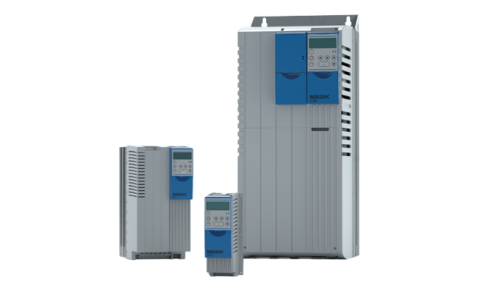
NORDAC PRO - SK 500E frequency inverter
Product Details:
- Material High-quality industrial-grade components
- Processing Type Electronic frequency control
- Direction Reversible operation
- Output Torque Up to 180 Nm (model-dependent)
- Rated Power 0.25 kW to 160 kW
- Input Speed 0 500 Hz input frequency
- Output Speed Variable, programmable by frequency setting
- Click to view more
X
NORDAC PRO - SK 500E frequency inverter Price And Quantity
- 1 , , Piece
NORDAC PRO - SK 500E frequency inverter Product Specifications
- 0 500 Hz input frequency
- Variable, programmable by frequency setting
- Reversible operation
- 0.25 kW to 160 kW
- High (typically 95%)
- AC 200-240V/380-480V, 3-phase or 1-phase (model-dependent)
- Up to 180 Nm (model-dependent)
- High-quality industrial-grade components
- Electronic frequency control
- Integrated fan cooling
- IP20 (standard), higher IP levels optional
- 150% rated current for 60 s, 200% rated current for 3 s
- -10C to +50C (without derating)
- Wall or cabinet mounting
- Depends on model; typically 1.5 kg 23 kg
- Integrated (standard, C1/C2)
- Integrated (standard in most models)
- Output: 0599 Hz
- Ethernet, CANopen, PROFIBUS, PROFINET, EtherCAT, Modbus
- Integrated LCD, optional external control panel
- Vector control, V/f control
NORDAC PRO - SK 500E frequency inverter Trade Information
- as per order Per Week
- as per order Week
Product Description
NORDAC PRO - SK 500E frequency inverter
Performance: 0.25 - 160 kW
Protection class: IP20
Features:
| Voltage: | 1~110-120V / 1/3~200-240V / 3~380-480V |
| Control terminals: | 5-8x DI / 2-3 x DO / 2xMFR / 2xAIN , 1X AOUT |
| Encoder interfaces: | TTL RS422 / SIN/COS / SSI / BISS / Hiperface / EnDat 2.1 / CANopen |
| Sizes: | 11 |
Version:
Operation of synchronous and asynchronous motors
Functions can be extended with plug-in control or communication modules
Characteristics:
POSICON - integrated positioning mode and synchronisation
An external brake rectifier can be controlled with NORDAC PRO via a digital output or multi-function relay
High precision regulation with current vector control
PLC functionality for functions close to the drive unit, for example status monitoring of the drive unit for pre-processing of process data
Energy-saving function in the partial load range
Control and parameterisation tools and simple parameter structure
Integrated line filter for compliance with EMC regulations
Control and closed loop regulation
STO and SS1 integrated functional safety
Hoist and lifting gear functionality
Suitable for open or closed loop operation
through 4-quadrant operation
Applications:
Intralogistics
General material handling
Process industry
Packaging industry
General mechanical engineering
Communication interfaces
Field bus protocols
AS Interface
CANopen
DeviceNet
InterBus
Profibus DP
Ethernet-based bus systems
EtherCAT
PROFINET IO
Powerlink
Advanced Motor Control Technology
The NORDAC PRO SK 500E leverages both vector and V/f control for precise speed and torque management. This ensures optimal performance across a wide range of motor types and industrial processes, enhancing efficiency and reliability in operation.
Flexible Connectivity for Seamless Integration
With support for multiple communication interfaces including Ethernet, CANopen, PROFIBUS, PROFINET, EtherCAT, and Modbus, the SK 500E integrates effortlessly with modern automation and control systems making it a future-ready choice for Indian industries.
Robust Protection and Versatility
The IP20 standard protection (upgradable) coupled with an integrated EMC filter and industrial-grade components ensures durability under challenging conditions. Its adaptable mounting choices allow for both wall and cabinet installations, broadening its application scope.
FAQs of NORDAC PRO - SK 500E frequency inverter:
Q: How do I install the NORDAC PRO SK 500E frequency inverter in my facility?
A: The NORDAC PRO SK 500E can be mounted on a wall or inside a cabinet, depending on your site requirements. Always ensure proper ventilation for its integrated fan cooling and follow the manufacturers guidelines for wiring and mounting for safe operation.Q: What are the main benefits of using vector control and V/f control on this inverter?
A: Vector control offers precise speed and torque regulation, which is crucial for demanding applications, while V/f control is suitable for standard variable-speed tasks. This dual capability maximizes flexibility and performance for diverse motor types and operating conditions.Q: When should I consider upgrading to a higher IP protection level?
A: Upgrade to a higher IP protection rating if your installation environment is exposed to dust, moisture, or requires additional ingress protection beyond standard IP20such as harsh industrial sites or outdoor settings.Q: Where can I use the NORDAC PRO SK 500E inverter within the temperature range?
A: The SK 500E operates efficiently in ambient temperatures ranging from -10C to +50C without derating, making it suitable for most industrial environments across Indias varied climate zones.Q: What is the process for connecting the inverter to my network or automation system?
A: Connect by selecting the suitable communication interfaceEthernet, CANopen, PROFIBUS, PROFINET, EtherCAT, or Modbusbased on your automation architecture. Use the integrated LCD or optional external panel for initial setup and configuration.Q: How does the integrated brake chopper benefit my application?
A: The integrated brake chopper (standard in most models) improves dynamic braking capability, which is especially beneficial in applications with rapid deceleration or high inertia loads, helping to maintain control and safety.Q: What efficiency can I expect from the NORDAC PRO SK 500E inverter during operation?
A: The inverter delivers high operational efficiency, typically 95% or greater, resulting in optimized energy use and lower operating costs for your industrial processes.Tell us about your requirement

Price:
Quantity
Select Unit
- 50
- 100
- 200
- 250
- 500
- 1000+
Additional detail
Mobile number
Email

Other Products in 'Nord Drivesystems (P) Ltd' category


Contact Details

- 308, Bhaveshwar Arcade, Opposite Shreyas Cinema, L.B.S. Marg, Ghatkopar (West), Mumbai - 400086, Maharashtra, India
- Phone : 08045478396
DYNAMIC PRODUCTS
GST : 27AAHFD0720F1ZX
GST : 27AAHFD0720F1ZX

- Mr Manish Parekh (Partner)
- Mobile : 08045478396
- Mr. Ashit Parekh (Partner)
- Mobile : 08045478396
- Send Inquiry
 Send Inquiry
 Send Inquiry
 Send SMS
DYNAMIC PRODUCTS
All Rights Reserved.(Terms of Use)
Developed and Managed by Infocom Network Private Limited.
Developed and Managed by Infocom Network Private Limited.


